


Why Your Neck Feels Heavy After Drying Wet Hair
Some beach days do not leave the body tired right away.
You come back from the water or the coast, take a shower, change clothes, and start drying your hair.
Nothing feels especially difficult.
The day may already be slowing down.
The room may be quiet.
You may only be standing in front of a mirror with a towel or a blow dryer in your hand.
Then, a little later, the back of the neck starts to feel heavy.
It may not feel like pain.
It may feel more like dull pressure.
The shoulders may feel slightly lifted.
The scalp may feel tight.
The area behind the ears and around the back of the head may feel tired in a way that is hard to explain.
This kind of heaviness can feel surprising because it does not come from swimming, walking, or carrying something heavy.
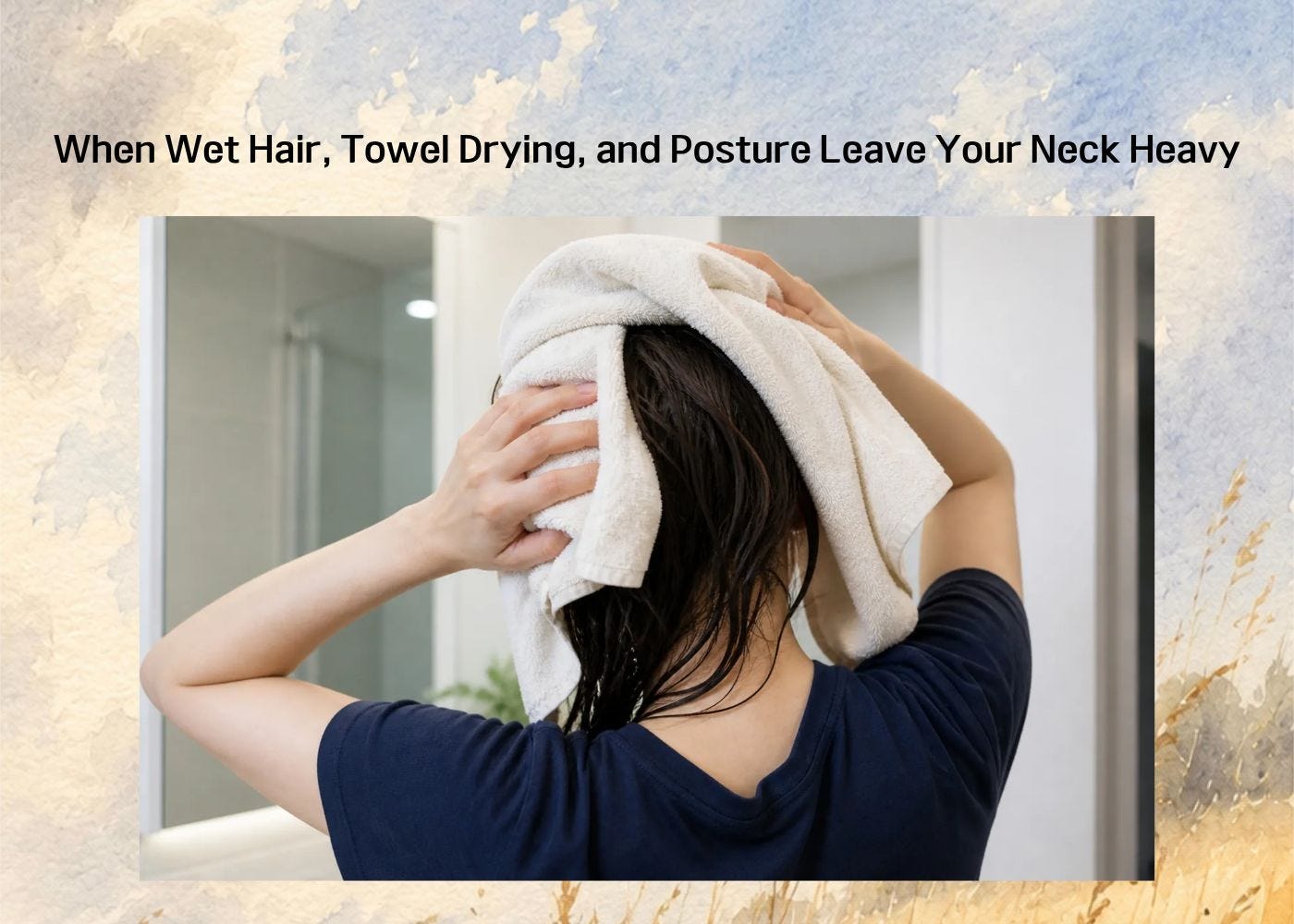
It can come from a short, ordinary moment: bending the head forward, turning the neck to one side, lifting the arms, and holding the body still while drying wet hair.
A Mayo Clinic article on neck pain explains that poor posture, including leaning forward or hunching over, can strain neck muscles and contribute to neck pain.
That makes hair-drying posture worth noticing, especially after a day when the body is already a little tired.
The beach may not be the main reason
After a day near Yangyang or Sokcho, it is easy to blame the sea first.
You may think the neck feels heavy because of the wind, the water, the walk back to the room, or the general tiredness of being outside.
Those things can matter, but sometimes the heavier feeling begins later, during the small routine after the shower.
Drying wet hair often looks simple, but the posture can be awkward.
The head tilts forward.
The shoulders rise.
One arm stays lifted.
The wrist and elbow move repeatedly.
The neck turns to help reach the back of the head.
If the hair takes a while to dry, the upper body may stay in this position longer than expected.
By the time the hair is dry, the neck and shoulders may have been working quietly for several minutes.
This is why the body can feel fine after the beach but heavy after the shower.
The tiredness was not dramatic.
It was built from small positions repeated in a short period of time.
Why the back of the neck reacts first
The back of the neck often reacts before the rest of the body.
When the head is bent forward, the neck muscles have to support the position.
When the arms are lifted, the shoulders and upper back join in.
When the body turns slightly to one side while drying the hair, the neck may hold a small twist without much movement.
These are not big actions.
They are small habits.
But small habits can still leave a mark, especially when the body is already tired from sun, wind, water, travel, or a long day outside.
The result may feel like heaviness at the base of the skull.
The shoulders may feel tight near the top.
The scalp may feel tense around the temples or behind the ears.
The neck may not hurt sharply, but it may feel like it does not want to hold the head anymore.
This is the kind of moment where strong pressure is not always needed.
A softer routine around the scalp, neck, and shoulders may feel more natural.
Yangyang evenings and neck tension after the shower
Yangyang often has a relaxed beach rhythm, but the body may still carry small tension by evening.
After time near the water, a shower can feel refreshing.
But when wet hair takes longer to dry, the neck and shoulders may start working again before the body has fully rested.
If your neck feels heavy after drying your hair in Yangyang, 양양출장마사지 can be introduced around gentle upper-body care.
The focus does not need to be strong pressure.
It can stay on scalp massage, neck care, shoulder care, and low-pressure relaxing massage.
This kind of care fits the moment because the tension is usually not only in one spot.
The scalp, back of the head, neck, shoulders, and upper back may all feel connected.
A slow session can help the body move from the shower routine into a calmer evening.
The scalp can feel tired after drying wet hair
The scalp is easy to forget until it starts to feel tight.
After towel drying, brushing, or blow drying, the area around the temples and the back of the head can feel sensitive.
The scalp may not feel painful, but it may feel tired.
Sometimes the heaviness spreads down into the neck.
This can happen because the head has been moved, tilted, rubbed, and held in place.
The arms may have stayed raised while the shoulders tried to support the movement.
The neck may have stayed bent while the hair was being dried from underneath or from the back.
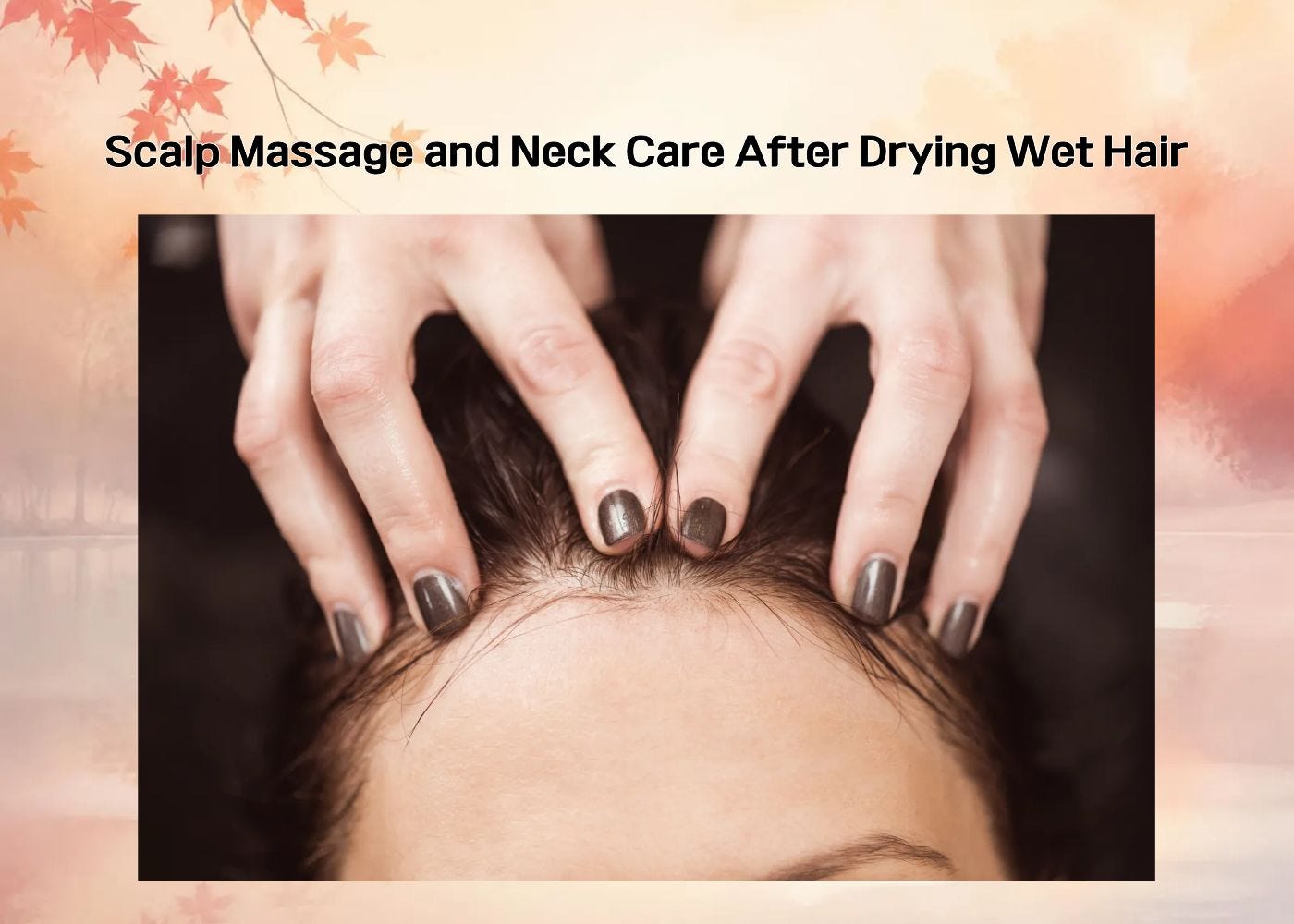
A scalp massage can fit this kind of fatigue well.
Slow pressure around the temples, behind the ears, along the back of the head, and down toward the upper neck can make the head feel less crowded.
It should not feel harsh.
The point is to soften the area that stayed active during the shower routine.
When scalp care is paired with light neck and shoulder care, the upper body often feels less guarded.
Sokcho and the quiet heaviness after a beach day
Sokcho can make the body feel tired in a way that arrives slowly.
A day may include the beach, a market, a café, a short walk, or a long rest in a room.
The schedule may not look intense, but by the time you shower and dry your hair, the neck may already be close to tired.
Then the posture finishes the job.
The head tilts.
The arms lift.
The shoulders rise.
The dryer stays in one hand.
The towel presses around the head.
The body stands still in front of the mirror longer than planned.
If the neck and shoulders feel heavy after this kind of evening, 속초출장마사지 can be mentioned through a soft recovery angle.
Scalp massage, shoulder care, and relaxing massage can match the body better than a strong deep-pressure session.
The better approach is slow and careful.
The body has already been through the day, the shower, and the posture. It may not need more intensity.
It may need a softer finish.
A short routine after drying your hair
A simple routine after drying wet hair can help the body settle.
First, lower the shoulders.
Many people keep them lifted without noticing.
Let the arms rest for a moment.
Turn the neck slowly, but do not force it.
Move the head gently from side to side and notice whether one side feels heavier.
Then, place the hands near the back of the head and breathe slowly.
The point is not to stretch aggressively.
The point is to remind the upper body that the hair-drying posture is over.
If the scalp feels tight, gentle pressure around the temples and behind the ears can feel helpful.
If the neck feels heavy, soft touch along the upper neck may feel better than pressing directly into the most uncomfortable point.
If the shoulders feel tired, slow shoulder care can help the body drop its guarded position.
A relaxing massage can fit this routine when the pressure stays low and the pace stays calm.
Aromatherapy massage can also suit the evening if the scent is light and not overwhelming.
Strong pressure is not always the answer
Neck heaviness after drying wet hair can feel annoying, but it does not always need intense care.
The body may not be asking for deep pressure.
It may be asking for the posture to change, the shoulders to drop, the head to rest, and the scalp to soften.
This is why a gentle massage can be more comfortable than a strong session.
When the neck is already sensitive from being held in one position, heavy pressure may feel like too much.
A slower approach gives the body time to respond.
The best care for this kind of evening is simple:
Scalp first.
Then the back of the head.
Then the upper neck.
Then the shoulders and upper back.
This order follows the way the tension often appears after drying hair.
Ending the evening with a softer neck
Not every beach-day fatigue begins at the legs.
Sometimes the body feels fine until the shower is over.
Then, after towel drying, brushing, or blow drying, the neck begins to feel heavy.
The shoulders feel slightly raised.
The scalp feels tight.
The back of the head feels dull.
This kind of fatigue is small, but it is real.
Around Yangyang and Sokcho, the beach may set the scene, but the final heaviness may come from the quiet posture afterward.
A few minutes of bending the head, lifting the arms, and holding the neck still can leave the upper body feeling more tired than expected.
On those evenings, the goal is not to force the body into deep recovery.
It is to give the scalp, neck, and shoulders a softer ending.
A little water, a slower pace, less screen time, gentle scalp care, and low-pressure relaxing massage can help the body move from shower time into rest.
The neck does not always need to be pushed.
Sometimes it just needs the day to stop sitting on top of it.
After a trip to Gangneung or Donghae, fatigue may not stay in just one area.
The feet, calves, lower back, shoulders, and neck can all feel heavy in different ways by the end of the day.
강릉, 동해 여행 후 부위별 피로와 마사지 회복 루틴 takes a closer look at body-specific fatigue and gentle massage recovery routines after travel.