

Why Your Ankles Feel Heavy Before Your Back After Standing by the Sea
Some days near the sea do not involve much walking.
You may stand near the water for a long time.
You may wait for photos, look at the waves, stay near a viewpoint, or remain in one place while talking with someone.
The distance you walked may not be long, but by the time you sit down, your ankles feel strangely heavy.
It can feel confusing because the back may not be the first area to complain.
The lower back might feel fine at first.
The shoulders may not feel especially tired.
But the feet, ankles, and calves feel dull, full, or slow.
This is a different kind of fatigue from walking.
Walking gives the body rhythm.
Standing still keeps the body loaded in one position.
The legs are not resting, but they are not moving enough either.
A guide from the Canadian Centre for Occupational Health and Safety explains that standing for long periods can contribute to sore feet, swelling in the legs, general muscular fatigue, low back pain, and stiffness.
It also notes that standing without relief from walking can allow blood to pool in the legs and feet.
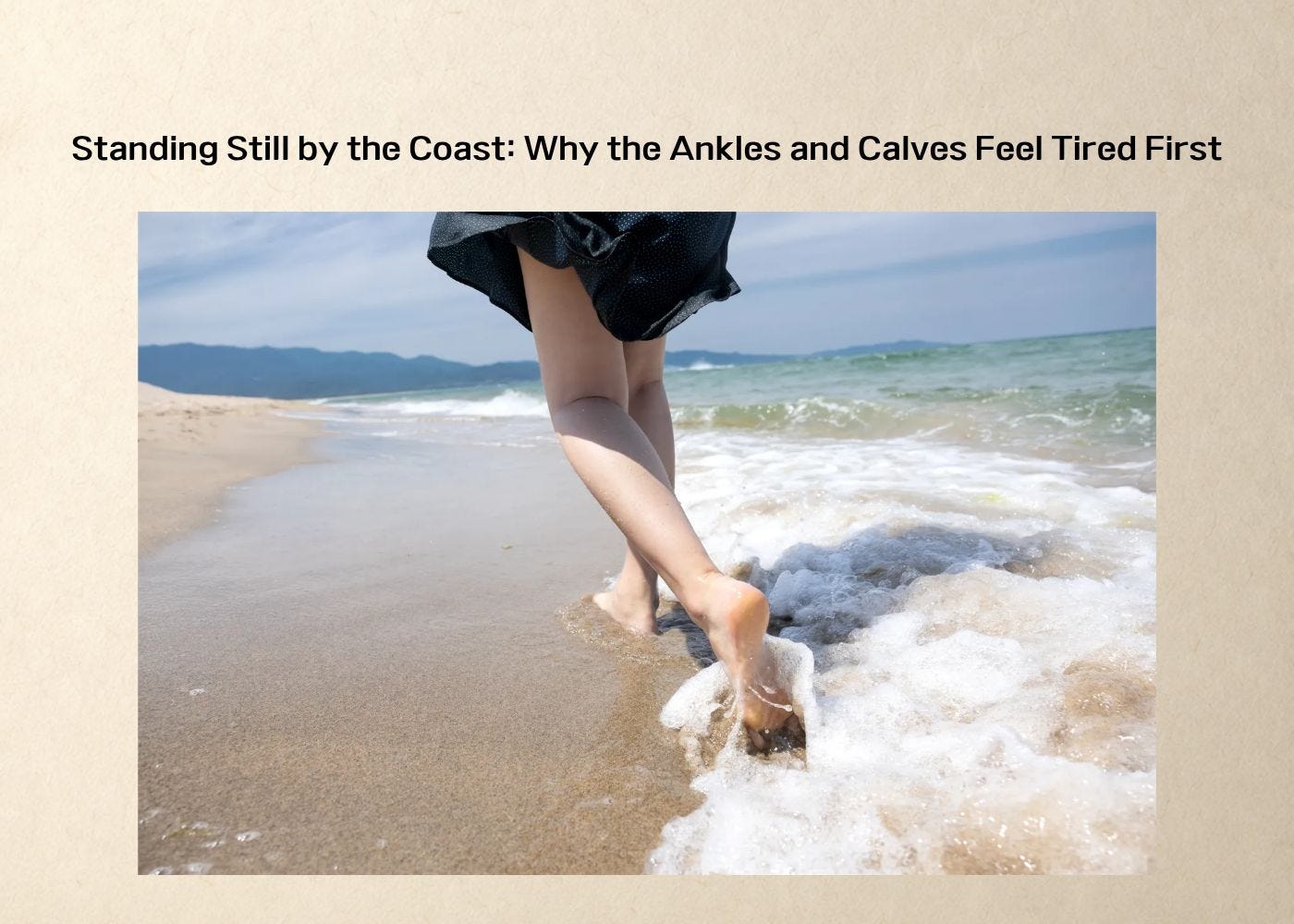
Standing still is not the same as walking
Walking and standing may look similar from the outside because both happen on your feet.
But the body experiences them differently.
When you walk, the feet keep changing pressure.
The ankles move.
The calves contract and relax.
The body shifts from one side to the other without staying fixed for too long.
Standing still is quieter, but it can feel heavier.
The feet press into the ground for a long time.
The ankles stay alert.
The calves keep working in the background.
The knees may lock slightly.
The body may lean to one side without noticing.
That is why a day by the sea can leave the lower body tired even when your step count is not high.
You may not have walked far, but your ankles and calves still spent a long time holding you upright.
Why the ankles feel heavy first
The ankles sit between the feet and the rest of the body.
When you stand near the coast, they keep making small adjustments.
The ground may be uneven. The shoes may not be supportive.
The body may lean forward while looking at the water.
You may shift your weight from one foot to the other, then forget to move again for several minutes.
Over time, the ankles can feel dull and heavy.
It may not feel like pain.
It may feel like the joint area has become slow.
When you finally start walking again, the first few steps may feel less smooth than usual.
This is where ankle care becomes useful in a gentle way.
The goal is not to force the joint or press hard into one point.
It is better to help the lower leg feel less stuck through slow foot massage, calf care, and light movement.
If there is sharp pain, swelling that does not settle, heat, redness, or pain after an injury, it is better to seek medical advice.
But for ordinary end-of-day heaviness, a lighter lower-body routine can feel more comfortable.
Donghae and the fatigue of standing at a viewpoint
Donghae has many places where people tend to stand still without realizing how long they have been there.
You may look at the sea, wait for a photo, stand near a walkway, or pause at a scenic spot.
The body feels calm because the view is open, but the legs may be working quietly the whole time.
After a while, the calves can feel tight.
The feet may feel warm or tired.
The ankles may feel heavier than expected.
This is the kind of fatigue that often appears only after you sit down.
If you are staying around Donghae and your ankles or calves feel dull after standing near the coast, 동해출장마사지 can fit naturally around lower-body care.
A gentle foot massage, calf massage, and light sports massage approach may suit the body better than strong pressure on the back.
The focus should stay below the knee first.
The feet, ankles, calves, and lower legs can be handled slowly before moving upward.
When the lower body starts to feel lighter, the rest of the body often feels easier to settle as well.
The calves often hold more tension than expected
The calves can become tired in a quiet way.
They do not always hurt sharply.
They may simply feel dense, tight, or slow.
When you press them lightly, they may feel more sensitive than expected.
When you stretch them, the tightness may feel deeper than you thought.
This can happen after standing because the calves are part of the body’s balance system.
They help keep you upright.
They respond when the ground changes.
They work when your weight shifts.
They stay active even when the rest of the body feels still.
Calf massage can help when the pressure stays steady and controlled.
A slower pace is usually better than quick, strong pressure.
The lower leg often responds better when the session begins gently and builds only as much as the body allows.
Sports massage can also fit this topic when it is presented as recovery care, not intense athletic treatment.
For a travel or coastal-day setting, the better tone is light sports massage for tired calves, ankles, and feet.
Samcheok and the lower-body heaviness after a quiet sea view
Samcheok can create a slower kind of body fatigue.
A person may stand near the beach, wait near a coastal path, pause at a viewpoint, or stay in one place longer than planned.
The day may feel peaceful, but the lower body may not feel fully rested afterward.
This is where ankle and calf heaviness can appear before lower-back discomfort.
The body did not move enough to feel like exercise, but it also did not fully relax.
If your lower legs feel tired after standing around Samcheok, 삼척출장마사지 can be introduced through a simple lower-body care angle.
Foot massage, calf massage, ankle care, and a light sports massage routine can match this kind of fatigue without making the session feel too heavy.
A good session for this moment should not rush to the strongest pressure.
It should begin with the feet and calves, then check how the ankles and lower legs respond.
If the body feels more settled, the care can move toward the thighs, hips, and lower back.
Why foot massage matters after standing still
Foot massage is easy to underestimate.
After standing for a long time, the feet can feel tired even when they are not sore.
The arch may feel dull. The heel may feel pressured.
The toes may feel stiff inside the shoes.
The ankle area may feel heavy because the foot has been carrying the same pressure for too long.
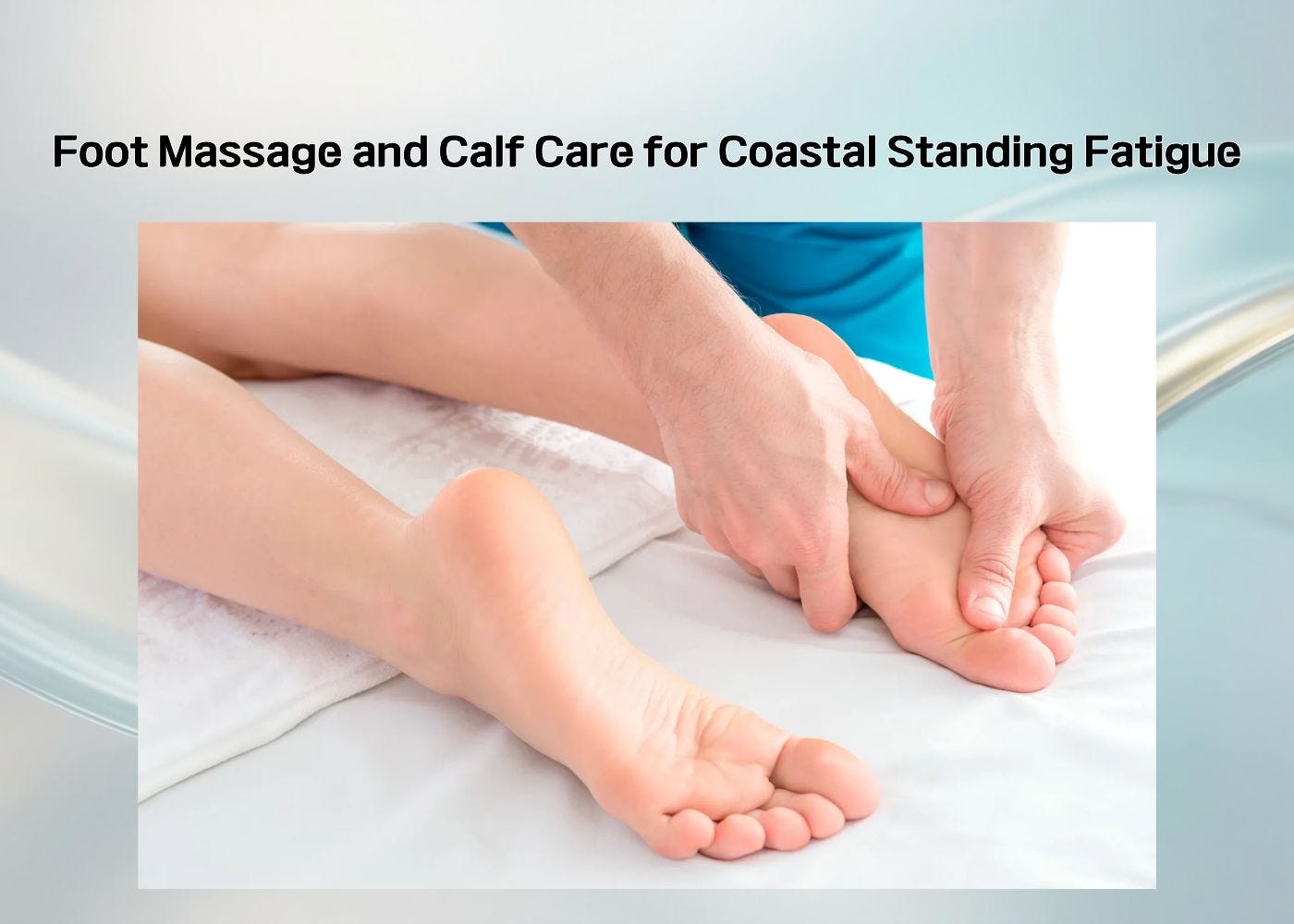
A slow foot massage can help the body notice the ground again in a softer way.
It can also make the ankles and calves feel less isolated.
When the feet begin to relax, the lower legs often feel less tense.
The important part is pressure control.
The foot can be sensitive after a long day, especially if the shoes were tight or the ground was hard.
A gentle start is better than pressing deeply from the beginning.
This is why foot massage, calf massage, and ankle care should be treated as one lower-body routine.
They are separate areas, but they respond to the same standing posture.
A simple lower-body routine after standing near the sea
A lower-body routine does not need to be complicated.
First, sit down and remove your shoes.
Let the feet rest for a few minutes.
If possible, lift the legs slightly and allow the ankles to move slowly.
Rotate the ankles gently. Point and flex the feet.
Let the calves stretch without forcing them.
Drink water, especially if the day involved sun, wind, or long outdoor time.
If the calves feel tight, start with light pressure.
If the feet feel tired, begin from the soles.
If the ankles feel dull, move around the area carefully rather than pressing directly into discomfort.
A massage routine for this kind of day can follow a simple order:
Feet first.
Then ankles.
Then calves.
Then thighs and lower back if needed.
This order makes sense because the fatigue started from standing.
The body does not always need full-body care right away.
Sometimes it needs the lower body to feel lighter first.
Strong pressure is not always better for tired ankles
When the lower body feels heavy, it is tempting to think stronger pressure will work faster.
But tired ankles and calves often need patience.
Strong pressure can feel good for a moment, but it may also make the area more sensitive if the body is already tired.
A better approach is steady pressure, slow movement, and careful attention to how the body responds.
The massage should feel like the lower body is being supported, not challenged.
This is especially true after standing near the sea.
The fatigue may be broad and dull rather than sharp.
It may come from time, posture, shoes, and the ground.
In that case, the goal is not to attack one painful spot.
The goal is to help the feet, ankles, and calves stop holding the day.
Ending the day from the ground up
After standing by the sea, the body often tells the story from the ground up.
The feet feel tired first.
The ankles feel heavy.
The calves feel tight.
Only later does the lower back begin to feel dull.
This is why lower-body care matters.
A quiet coastal day may not look physically intense, but standing in one place can leave its own kind of fatigue.
The body has been upright, balancing, waiting, leaning, and holding small postures for longer than expected.
For days around Donghae and Samcheok, a gentle routine focused on the feet, ankles, and calves can feel more suitable than starting with the back.
Foot massage, calf massage, ankle care, and light sports massage can help the body settle from the ground up.
The best care is not always the strongest care.
Sometimes it is the slower one.
The one that starts at the feet, listens to the ankles, softens the calves, and gives the lower body enough space to finally stop standing.